Learn / Scratch Testing
Scratch Testing
Critical loads,
damage progression,
and coating failure.
Learn how scratch tests are run, what critical loads do and do not mean, how failure evolves during a scratch, and how to interpret the evidence without oversimplifying coating performance.
1 · Start here
Build the foundation
2 · Learn the core
Master the key concepts
3 · Use a tool
Work with your data
No Scratch tool yet. The tool workbench has the calculators and simulators that exist today; this lane fills in as they are built.
4 · Solve a problem
Troubleshoot real data
5 · Go deeper
Research-level topics
6 · All resources
Every Scratch page
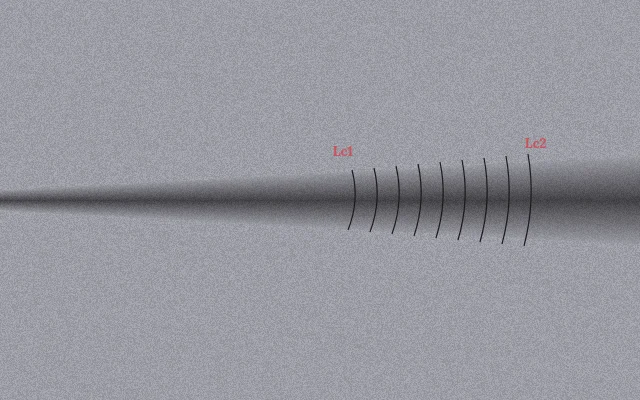
- GuideWhat a Scratch Test's Critical Loads MeanLc1, Lc2 and Lc3 from a progressive-load scratch test, built from the contact mechanics up: Hertzian and fully plastic contact, the Hamilton–Goodman tensile stress behind a sliding sphere, and an interfacial energy criterion. Interactive, and honest about why a critical load is not a material property.
- GuideScratch vs. Indentation HardnessScratch hardness from the groove width, why four defensible width conventions give four different answers, the Hokkirigawa–Kato ploughing–wedging–cutting map, and why H³/E² outranks hardness as a screening index for coatings. Interactive.
- FAQTribology, Indentation & Scratch FAQTroubleshooting FAQ for contact mechanics, wear, nanoindentation and scratch testing: real contact area, wear-mechanism competition and wear depth, Oliver-Pharr hardness and its error budget, size effects, loading-mode choice, and scratch critical loads and hardness conventions.
Other fields: TEM & STEM · EBSD & TKD · Atom Probe · Crystallography · Phase Transformations · Tribology · Nanoindentation · In-situ / FIB.