Research / Surfaces that fail / Wear of printed superalloys at temperature
Surfaces that fail · PhD project
Wear of printed superalloys at temperature
A 3D-printed part starts life with a rough, layered surface and a microstructure no forging ever had. How does it wear in when it is hot, and can a surface treatment fix it before it fails?
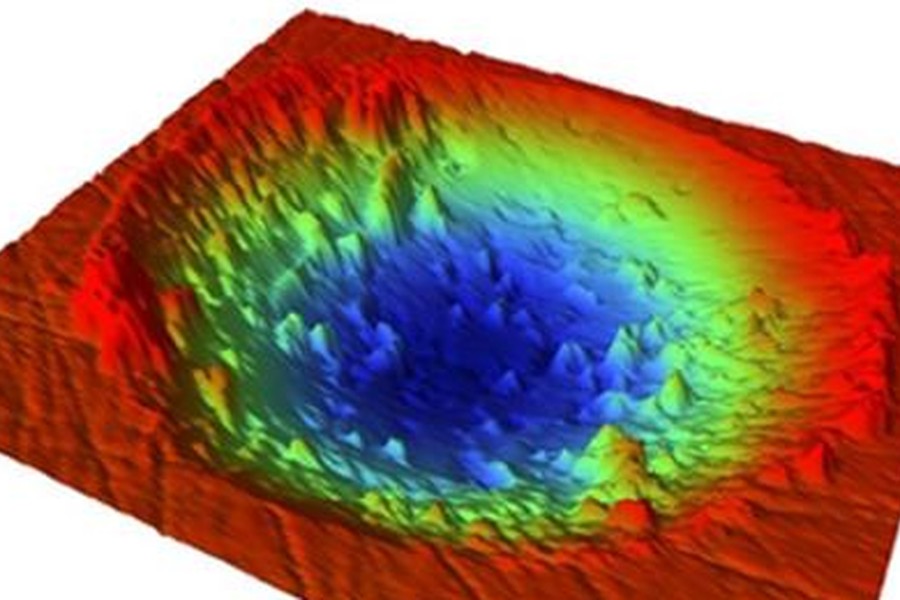
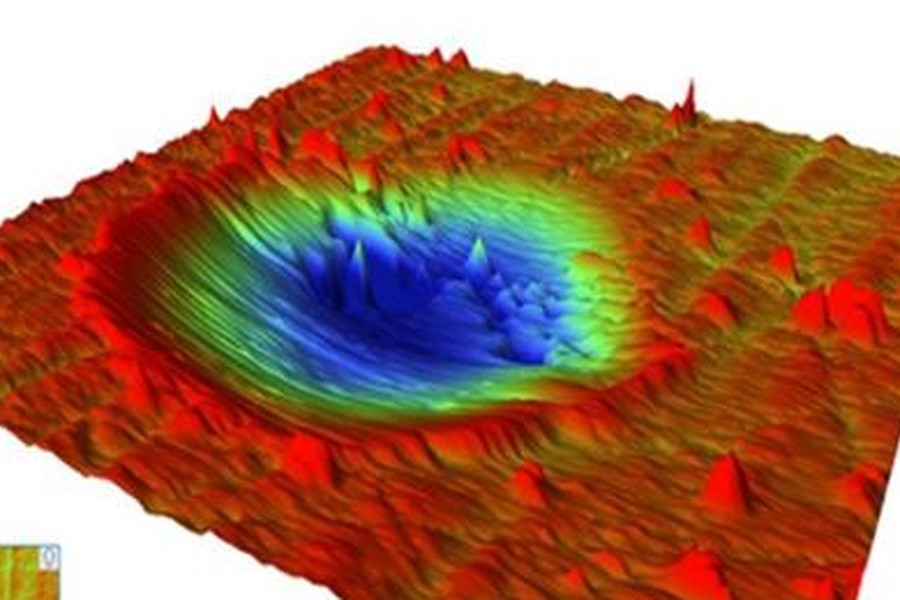
Nickel superalloys make up more than half the weight of a jet engine, and many of their parts, joints, valves, heat exchangers, rub against each other while hot. Fretting, the small back-and-forth rubbing at those contacts, is how they wear out. My PhD (George Mason University, 2023) was the first study of fretting wear in additively manufactured Inconel 625 at high temperature: how it compares with the wrought alloy, what the print settings change, and whether shot peening or laser peening can make the surface last longer.
- Materials
- Inconel 625, laser powder-bed fusion and wrought; 17-4 PH stainless steel
- Tests
- Fretting wear from room temperature to 700 °C, in-situ high-temperature nanoindentation, shot peening and laser peening
- Characterization
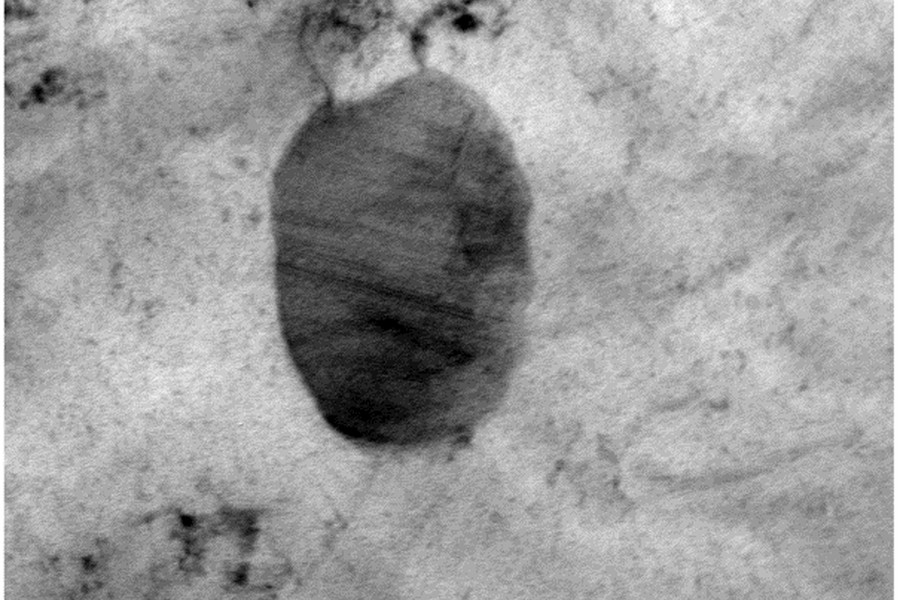
- 3D profilometry, SEM, EDS, XPS, EBSD, TEM, residual-stress measurement
- Output
- Two published papers, one in review, seven conference talks and posters
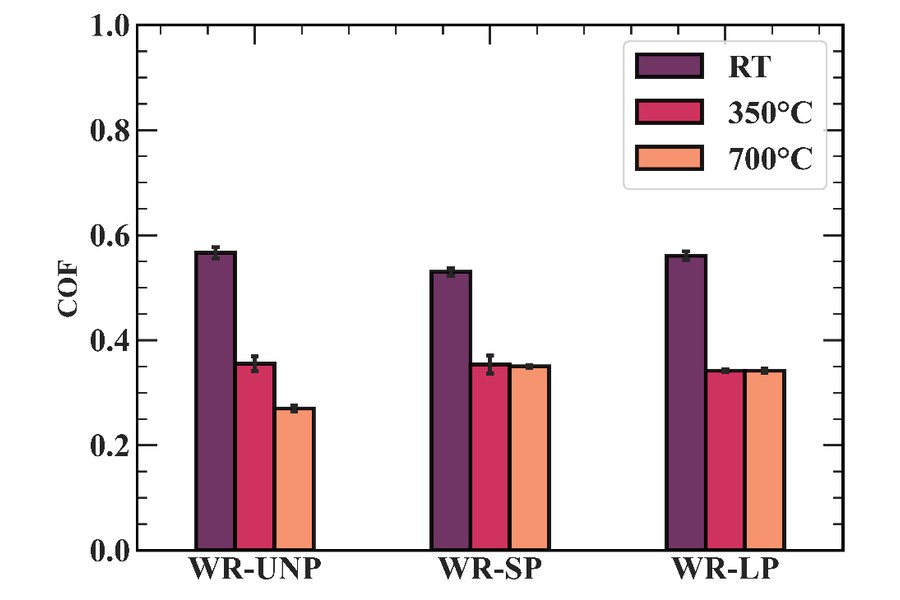
1 · Hot is not worse. At 510 °C the alloy is 30% softer, but it wears less and slides with less friction than at room temperature. A compact oxide layer forms on the surface and takes the contact instead of the metal.
2 · Printed beats wrought when hot. At room temperature the wrought alloy wears slightly less. At 350 and 700 °C the printed alloy wears much less, because its finer, more defective microstructure oxidises faster and builds the protective layer sooner. Thinner print layers help; print orientation does not matter.
3 · Laser peening works, shot peening backfires. Both put compressive stress into the surface. Shot peening work-hardens a thin skin that cracks and wears faster than untreated metal. Laser peening reaches deeper, refines the grains, and cuts wear at every temperature tested.
4 · Peening can replace the heat treatment. Laser peening relieves the internal stress of the as-printed part and spreads the precipitates more evenly, doing part of the job of a post-build anneal.