For anyone who has ever sat in a room and wondered whether they belong in it.
There is a teenager on the floor in front of a television. They are sitting too close, the way they have always been told not to. The show is Naruto, a Japanese anime about Naruto Uzumaki, a boy in a village of ninjas. He has no parents, no friends, and no apparent talent. He wants more than anything to be Hokage, the leader the whole village looks up to. Not for the power. A child who grew up without love goes looking for it in the only form he understands: respect. On the screen, he has just failed the ninja academy’s graduation exam for the third time. Everyone else has passed. He is alone on a swing outside the school. The parents collecting their children look at him the way people look at a rabid dog. When he was a baby, a monster was sealed inside him to save the village, and the village has never forgiven him for it. The teenager does not know yet why this scene will stay with them forever.
There is a student in a small room on a campus, in a country they have been in for six weeks. That morning, in a lecture, they understood every word the professor said and none of what it meant. When they asked a question afterward, they were asked to repeat it twice. The second time, they heard their own accent as if from across the room. On the desk is a problem set they cannot start. It is in a subject they were the best at back home. Everyone around them was the best at it back in their homes too. The student is not crying. They are doing the thing before crying, where you decide whether to.
There is a scholar at a desk late at night with a stack of application letters open. Each one is addressed to a committee they will never meet. Each one asks the same question in different words: who are you, and why should we give you a lab with your name on the door? The answer has been written eleven times. Each time it comes out as a list of things done, which is not what they are asking. Across the hall, one of the scholar’s mentees has been staring at the same failed sample for a week. The scholar is tired in a way that sleep does not fix. They open the next letter anyway.
On the TV screen, Mizuki, a teacher Naruto trusts, tells him there is another way to pass. Steal the Scroll of Seals from the Hokage’s house and learn one technique from it. It is a lie. Mizuki wants the scroll for himself and needs someone desperate enough to take the blame. Naruto takes it into the woods. In a few hours, he teaches himself the Shadow Clone technique, a way of making many clones of yourself. Grown ninjas cannot manage it. Then the lie comes apart, and Mizuki turns on him. Naruto uses what he has just learned to protect Iruka sensei, the one adult who has ever stood up for him. He passes that night, for a reason that has nothing to do with the exam. The teenager understands, without words, that the point was never the scroll.
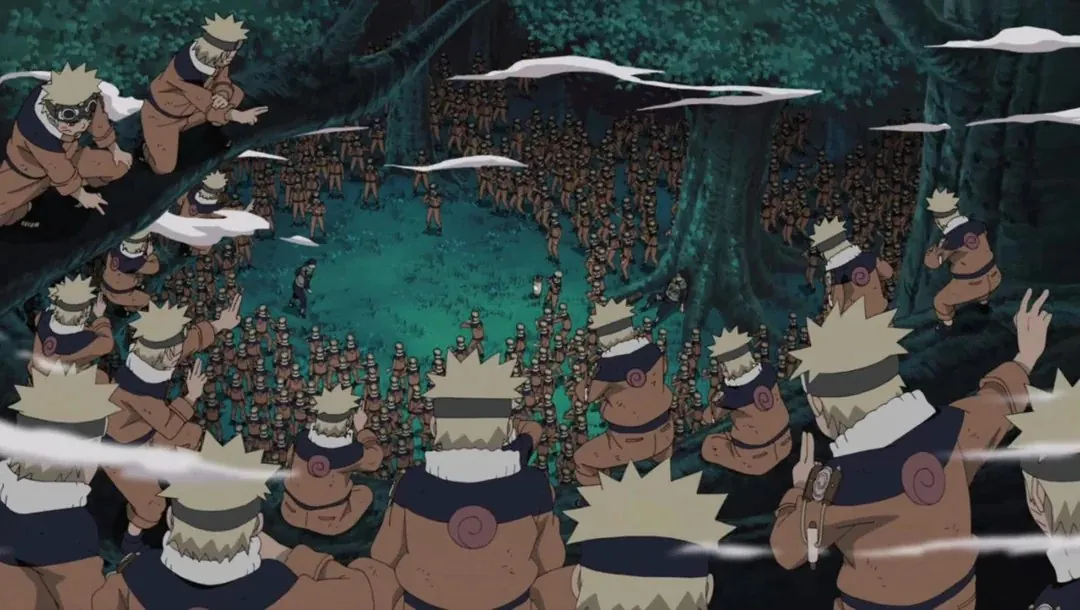
Naruto fills the forest with shadow clones. A few hours earlier he had failed the exam for the third time.
In the small room, the student decides not to cry. The problem set is finished wrong and handed in wrong. The student takes it to office hours, where the professor explains. The student is the only one who needed the explanation. Outside the classroom, the student is learning to cook for the first time in their life, from videos, in a shared kitchen at midnight. The rice is either raw or glue. The food back home was made by someone who loved them. They are learning to drive on the wrong side of the road. Rent, the visa office, the first winter, the teaching job that pays for it all. None of it is hard on its own. All of it is happening at once. The character the student has started to think about is not Naruto. It is Rock Lee, the boy in Naruto’s year. Every ninja in the show fights with chakra, an energy inside the body that they shape into techniques: fire, clones, illusions, walking up walls. Lee’s body cannot shape chakra at all. He can do none of it. All he has is his fists and feet, and the hours he is willing to put in. He wants what every boy in his class wants, to be a ninja alongside his friends. The only road left to him is to train until his body is enough on its own. Everyone around the student has had years of this language, these roads, this way of working. The student has had six weeks. What they have is the hours. By the end of the year, they have worked harder than they have ever worked, and they are still behind. Lee is still behind too. The show does not pretend otherwise.
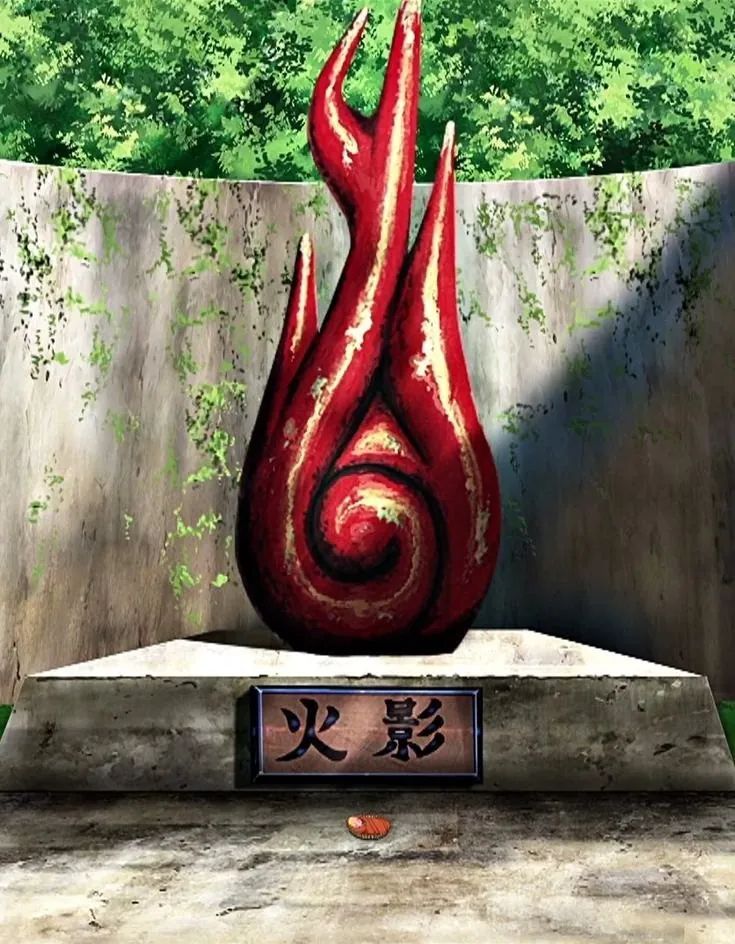
The scholar, staring at the applications, keeps thinking about Kakashi sensei. Kakashi is the teacher assigned to Naruto’s team. He has one eye covered and a reputation for being late to everything. The village treats the lateness as a joke. The truth comes out slowly. He spends every morning at the memorial stone where his dead teammates’ names are carved, and loses track of time there. His first test for the three children is simple. Two bells on his belt, three students, and whoever has no bell by noon goes back to the academy. They fight him one at a time. They lose one at a time. They are tied to posts and lectured. The test was never the bells. It was whether three frightened children would work out that the only way any of them passes is together. Kakashi has failed every team sent to him before this one. Every letter on the scholar’s desk asks the same thing in the language of committees: can you lead people? The scholar looks across the hall at the mentee and the failed sample. There is only one honest answer. A lab where nobody passes alone.
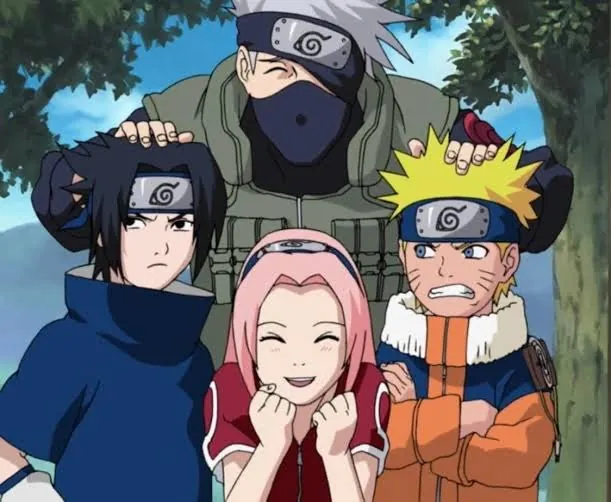
On the screen, years have passed. Naruto’s closest friend has left the village. Naruto has gone away to train with Jiraiya, one of the three legendary ninja and the man who trained Naruto’s own father. The show skips those years entirely. He comes back taller and stronger. The first thing he learns is that the friend he trained to catch up with has trained harder, and the gap has not closed. The teenager watches Naruto take that in and get up anyway. Years of work, and the reward is that you are allowed to be better, not caught up. That turns out to be the most useful thing the teenager ever learns about work. Nobody says it. An anime shows it.
Some years later, the student from the small room is in a different room. The doctorate is half finished. There is a letter of their own on the desk, addressed to the graduate school. It asks to withdraw from the program. It has been written carefully, with much deliberation, and it is ready to send. The details do not matter. What matters is that for a long time they had been working in a place where the harder they tried, the less it counted. They had reached a point where trying was no longer a choice they were making. The student is thinking about Lee’s one real fight. In the village’s great examination, Lee is paired against Gaara, a boy who has never once been scratched. The sand around Gaara moves on its own to protect him. Lee takes the weights off his legs, and for a few minutes he is faster than anyone in the building. Then he opens the inner gates, a technique that tears your own muscles apart to borrow strength you have not earned. He almost wins. Almost. The sand crushes his left arm and his left leg. He is unconscious. His body gets up anyway and stands in a fighting stance, because that is what it has been trained to do. Standing, but not by choice. The student knows exactly what that looks like from the inside.
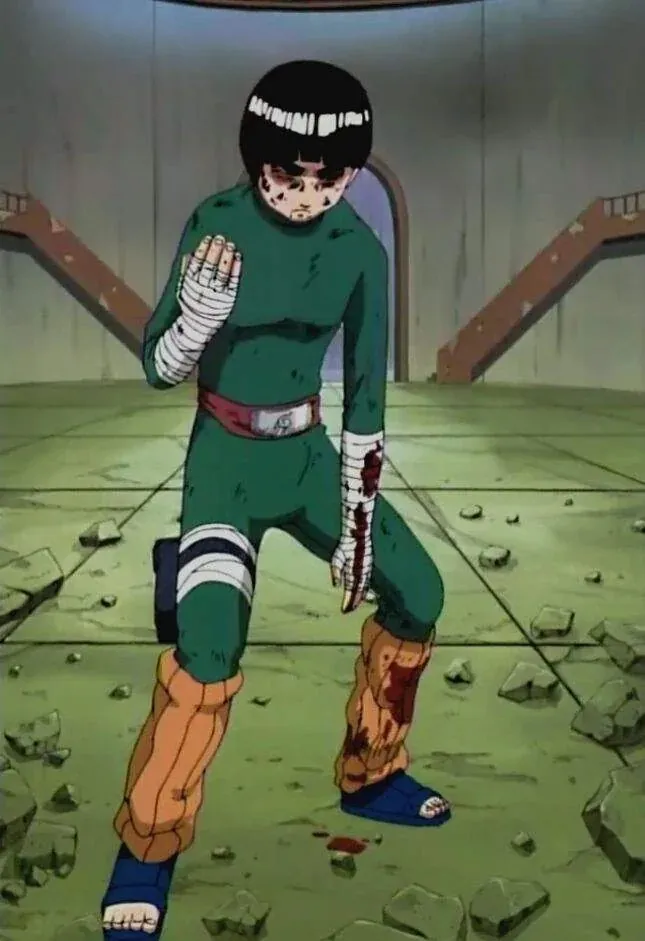
The letter was not sent. The student would like to say they found something within themselves. That is not true. What they found was the support of the chair of the department and some professors who had no reason to care. They sat with the student and said they belonged in the room and would be helped to finish. In the show, Lee wakes in a hospital bed. He is told the surgery that might fix him has a fifty percent chance of killing him. The person beside the bed is Guy Sensei, his teacher, a loud man in a green jumpsuit. Guy says that if the surgery kills Lee, he will die with him. Lee chooses the surgery. He gets up from that bed because someone was sitting beside it. Nobody gets up from the floor alone.
The teenager, on the floor, is watching that scene for the first time. They do something they have never done in front of a television. They cry, properly. A parent comes in to ask what is wrong. The teenager cannot explain, because they do not yet have the thing the scene is about. They will.
The scholar has one more thing to learn from Kakashi, and it is the part the letters never ask about. Under the covered lid, Kakashi carries a Sharingan, an eye that was not born his. A dying teammate gave it to him. It lets him see any technique performed in front of it clearly enough to copy it. He is called the Copy Ninja because he has learned a thousand techniques this way. But the eye is not why he is the best teacher in the village. He is the best teacher because he has never stopped being a student. When Naruto later needs a technique that is beyond Kakashi’s own ability, Kakashi does not pretend. He works out how to teach Naruto to get there by a road Kakashi himself cannot walk. That, the scholar thinks, is the job. Not to be the one who knows, but to keep learning fast enough to be useful to the person across the hall. The scholar closes the letters and gets up.
The scholar knows what the mentee is going to say, because the scholar has said it. In the small room. In the half-finished doctorate. And once more in an office with a good salary and a view, coming home every evening feeling nothing about the day. The scholar gave that job up for less than half the money and twice the hours. The reason was simple: to sit with one hard question for years and chase the why until it gave up its answer.
So the scholar sits down next to the mentee and says none of this. Nobody wants a speech at eleven at night. Show me the sample. They look at it together. It is still wrong. Tell me what you tried. Tell me what you have not tried. After a while the mentee is talking faster and the scholar is only nodding. It is not fixed tonight. But the mentee is standing, and this time it is by choice.
If I were allowed the speech, it would be short. Failure is the job, not a sign you are in the wrong job. The training years are skipped in every story but your own. Your gates are real, and you get them for a few minutes. Spend them on what matters, then rest; Lee’s recovery took longer than his fight. And let people carry you.
I should tell you now that there was never a teenager, a student and a scholar. There was one person. If you have read this far, there is a fair chance you have been one of the three yourself, or are tonight. I was all of them. On the floor, too close to the screen. In the small room. With the withdrawal letter ready to send. Beside the department chair who would not let me send it. In the office with the view. The letters are on my desk tonight, asking strangers for a lab of my own. In the village, there is a name for the thing every Hokage passes to the next: the Will of Fire. Each generation is raised by the one before it and owes the same to the one after. I got the support I needed when I needed it. The only honest reason I can give the selection committee for wanting a lab is that it is my turn to pass it on.
The pictures are frames from the anime Naruto (Masashi Kishimoto; Studio Pierrot), shown here for comment and discussion.